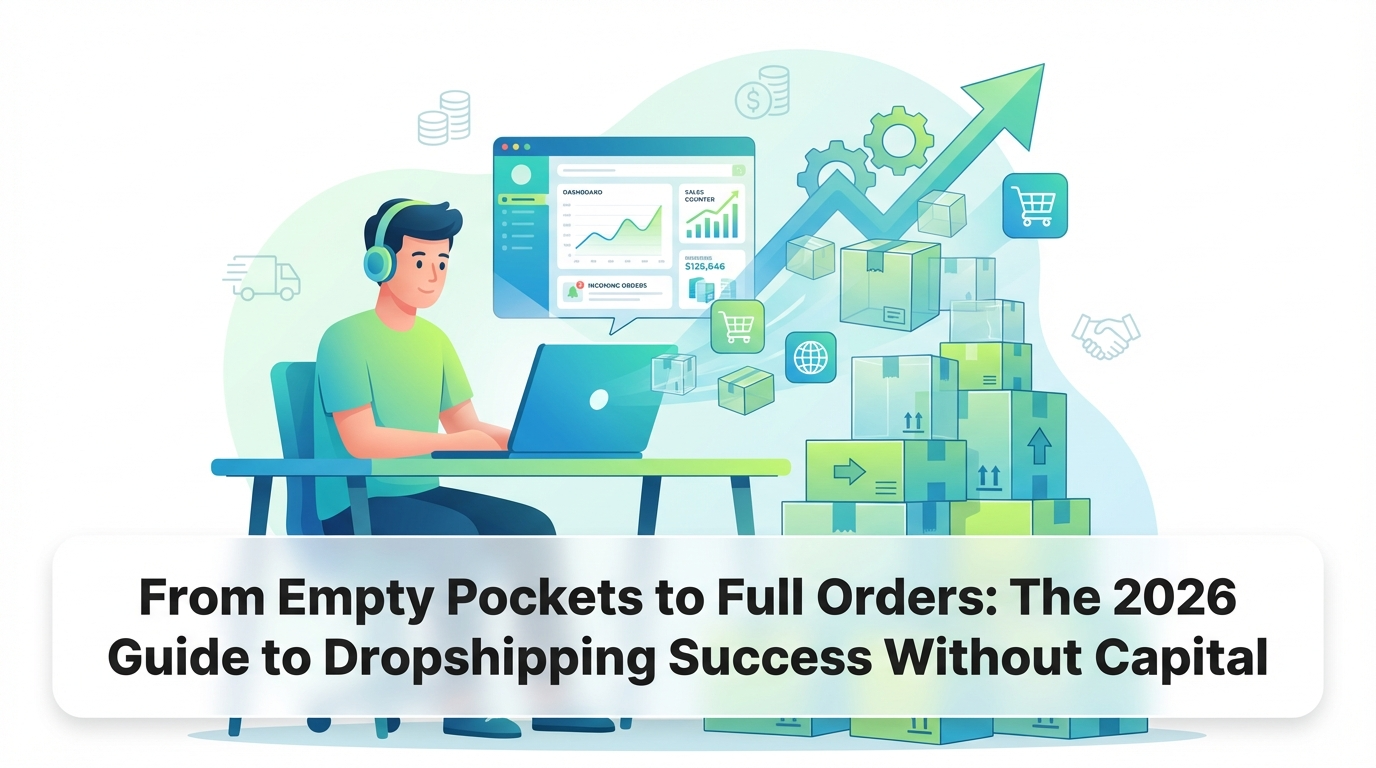
From Empty Pockets to Full Orders The 2026 Guide to Dropshipping Success Without Capital

In the ever-evolving e-commerce landscape of 2026, one business model continues to thrive by removing traditional barriers to entrepreneurship: dropshipping. What makes it especially appealing? You can how to start dropshipping with no money and build a profitable online business without significant upfront investment.

As someone who has spent decades understanding consumer behavior and marketing psychology, I can tell you that dropshipping represents the democratization of retail. This guide will walk you through practical steps to launch your dropshipping venture with minimal to zero capital in 2026.

Why Dropshipping Remains Viable in 2026

Despite predictions of market saturation, dropshipping continues to evolve and present opportunities for newcomers. The model’s fundamental appeal—selling products without inventory management—remains its greatest strength. When you how to start dropshipping with no money, you’re essentially creating a virtual storefront that connects suppliers directly with consumers.

The 2026 dropshipping landscape offers advantages previous generations lacked:

  • AI-powered market analysis tools available on freemium models
  • Zero-cost website builders with integrated e-commerce capabilities
  • Commission-based payment processing that scales with sales
  • Free social media marketing channels with precise targeting

Finding Your Zero-Investment Niche

The first step to how to start dropshipping with no money is identifying a viable niche that balances competition with opportunity.

Conduct Cost-Free Market Research

Begin with these zero-budget research methods:

  1. Google Trends analysis: Track rising product categories without spending a dime
  2. Social media listening: Monitor hashtags and conversations around potential products
  3. Reddit and forum exploration: Identify pain points and product discussions in niche communities
  4. Competitor analysis: Study successful dropshipping stores using free browser extensions

The secret is finding products with sufficient search volume but manageable competition. Look for items with emotional purchase triggers—products that solve specific problems or fulfill aspirations.

Setting Up Your Free Dropshipping Infrastructure

Building Your Store Without Capital

Several platforms allow you to establish an online presence without upfront costs:

  • Shopify’s free trial: Launch with 14 days of full functionality
  • WooCommerce on WordPress.com: Free starter plan with basic e-commerce capabilities
  • Etsy: No monthly fees, just transaction costs after sales
  • Social commerce: Utilize Instagram Shops and Facebook Marketplace with zero setup costs

Finding No-Upfront-Cost Suppliers

The key to how to start dropshipping with no money is partnering with suppliers who don’t require membership fees:

  • AliExpress: No subscription fees, though shipping times can be longer
  • Spocket: Free plan with limited products
  • DSers: Basic free plan for AliExpress integration
  • Local supplier partnerships: Some manufacturers offer dropshipping arrangements with no upfront costs

Zero-Budget Marketing Strategies for 2026

Content Creation That Costs Nothing But Time

Create compelling content using:

  • SEO-optimized product descriptions: Target long-tail keywords with minimal competition
  • Educational content: Develop how-to guides around your products
  • User-generated content: Encourage early customers to share experiences

Leveraging Free Traffic Sources

  • Pinterest marketing: Create visually appealing pins linking to your products
  • TikTok organic growth: Develop product demonstrations that showcase solutions
  • Search engine optimization: Focus on long-tail keywords with specific intent
  • Strategic hashtag use: Tap into trending conversations relevant to your products

Scaling Beyond Zero: Reinvesting First Profits

Once you’ve managed to how to start dropshipping with no money and generate initial sales, strategic reinvestment becomes critical:

  1. Automated email marketing: Implement free plans from providers like Mailchimp
  2. Limited paid advertising: Start with micro-budgets ($1-5/day) on highly targeted campaigns
  3. Inventory expansion: Add complementary products with proven demand
  4. Customer service tools: Improve response times with free chatbot solutions

Common Pitfalls When Starting With No Budget

Avoid these frequent mistakes:

  • Over-diversification: Focus on mastering one product category first
  • Ignoring fulfillment issues: Be transparent about shipping times
  • Neglecting legal requirements: Use free resources to understand compliance needs
  • Poor supplier verification: Research thoroughly before listing products

Case Study: Zero to $5,000/Month With No Initial Investment

Consider Maria, who launched her eco-friendly home products dropshipping store in early 2025. She followed the exact principles outlined for how to start dropshipping with no money:

  • Utilized Shopify’s free trial, then switched to a commission-based marketplace
  • Focused exclusively on TikTok organic marketing for the first three months
  • Partnered with suppliers offering net-30 payment terms
  • Reinvested 80% of initial profits into strategic growth areas

Within six months, her business generated consistent $5,000 monthly revenue without any starting capital.

The Psychological Edge of Zero-Budget Dropshipping

Starting with no money forces creativity and efficiency. You’ll develop critical skills including:

  • Persuasive copywriting: Converting visitors without paid tools
  • Analytics interpretation: Understanding customer behavior through free data
  • Negotiation abilities: Securing better supplier terms
  • Resourcefulness: Finding solutions without throwing money at problems

These entrepreneurial muscles will serve you well as your business scales.

Remember, how to start dropshipping with no money isn’t just possible—it’s a strategic advantage that forces discipline and creativity from day one.
Leave a Reply

Maximizing Profits with Product-Based Income

Introduction to eCommerce and Product-Based Income

In the rapidly evolving world of commerce, maximizing profits through product-based income stands as a critical goal for many online businesses. With the rise of eCommerce platforms, marketplace dynamics, and the dropshipping model, the landscape offers ample opportunities for digital entrepreneurs to thrive. By leveraging digital platforms and employing strategic inventory management, entrepreneurs can optimize conversion rates, enhance the checkout process, and ultimately boost revenue. This article explores how businesses can capitalize on these opportunities in the digital marketplace.


Historical background

The concept of product-based income is not new; it has its roots in traditional retail when brick-and-mortar stores were the primary channels for selling goods. However, the advent of the internet and the development of eCommerce platforms have dramatically transformed how products are marketed and sold. Platforms like Amazon and eBay have redefined retail, turning it into a vast global marketplace. This shift democratized access to consumers, enabling even small businesses to reach a broad audience without the significant overhead typical of physical stores.


Current trends and developments

Today’s eCommerce ecosystem is characterized by innovation and agility. Dropshipping has become a prominent model, allowing merchants to focus on sales and marketing while suppliers handle inventory and fulfillment. Analytics and data-driven insights are essential components, helping businesses understand customer behavior, track sales trends, and optimize the supply chain. Moreover, the integration of various payment gateways has streamlined the checkout process, enhancing the customer experience and improving conversion rates. Companies are harnessing digital platforms to expand their reach and personalize marketing efforts, further boosting sales and revenue.


Key challenges and issues

Despite the opportunities, businesses face significant challenges. High competition within the marketplace can squeeze profit margins, while managing logistics and supply chain complexities can be daunting. Inventory management requires precise forecasting to avoid overstocking or stockouts. Additionally, maintaining a seamless customer experience from browsing to payment and shipping is crucial for retaining customers. Security concerns related to digital payments and customer data protection also pose ongoing threats that require continuous vigilance and adaptation to new technologies.


Impact and implications

The shift towards eCommerce and product-based income has far-reaching implications for the global economy. It has enabled smaller businesses to scale rapidly and compete with established brands by leveraging digital tools and platforms. The direct-to-consumer model is gaining traction, reducing the dependency on traditional retail channels. This transformation is reshaping marketing strategies, forcing companies to become more customer-centric and data-driven. Moreover, the need for efficient logistics and fulfillment solutions has led to innovations that impact the broader supply chain and shipping industries.


Case studies and examples

Several success stories illustrate the potential of maximizing profits through product-based income. Shopify, an eCommerce platform, empowers millions of merchants worldwide with tools to run their online stores, demonstrating how technology facilitates entrepreneurship. Similarly, brands like Gymshark have harnessed social media and influencer partnerships to grow from small startups to billion-dollar companies, highlighting the power of digital marketing and direct consumer engagement.


Expert opinions and insights

Industry experts emphasize the importance of an integrated approach that combines traditional business principles with digital innovation. To thrive, businesses must focus on customer relationships and use analytics to tailor their strategies. Leveraging technology to streamline operations is paramount, as is maintaining flexibility to adapt to market changes. Experts also stress the value of sustainable practices and the need for ethical considerations in sourcing and operations, noting that consumers increasingly prioritize responsibility and transparency.


Future perspectives and predictions

The future of eCommerce and product-based income appears bright, with exponential growth expected in digital retail due to technological advancements and increased global connectivity. Personalized shopping experiences driven by artificial intelligence will become more prevalent, enhancing customer engagement and loyalty. Additionally, innovative fulfillment methods, like drone deliveries and advanced robotics in warehouses, promise to further revolutionize logistics. However, businesses must remain agile, prepared to navigate shifting consumer expectations and technological landscapes.


Policy considerations

As the eCommerce landscape evolves, regulatory frameworks must adapt to address emerging challenges. Policymakers need to ensure data privacy, fair competition, and consumer protection measures keep pace with technological changes. Facilitating cross-border trade through streamlined customs processes and fostering a supportive environment for innovation and entrepreneurship while maintaining fair tax regulations are crucial for sustaining industry growth.


Conclusion and summary

Maximizing profits with product-based income in today’s digital economy involves a blend of leveraging technology, understanding customer needs, and optimizing operational efficiency. As eCommerce continues to advance, businesses that adapt quickly and innovate strategically will lead the market. Keeping pace with trends, addressing challenges, and staying customer-focused will ensure long-term success and sustainability in this dynamic landscape.
The journey to thriving in the digital marketplace is an ongoing one, requiring vigilance, adaptability, and a commitment to continuous improvement. As new technologies emerge and consumer preferences evolve, the potential for growth in product-based income remains considerable, offering a promising future for those ready to embrace the challenges and opportunities it presents.

Leave a Reply

From Side Hustle to Full-Time Income Building a Sustainable Affiliate Marketing Career

The Evolution of Digital Entrepreneurship

In today’s digital landscape, entrepreneurial opportunities have expanded beyond traditional business models. One of the most accessible entry points into online business is affiliate marketing – a performance-based marketing strategy where you earn commissions by promoting other companies’ products or services.

As someone who has witnessed the transformation of advertising over decades, I find the democratization of marketing particularly fascinating. Unlike traditional advertising, where massive budgets were prerequisites for success, affiliate marketing enables individuals to build profitable businesses with minimal upfront investment.

The Overlooked Foundation: Strategic Niche Selection

Many aspiring marketers rush into affiliate marketing without proper groundwork. They select products randomly or chase after high-commission offers without considering market fit or personal expertise.

Strategic niche selection involves finding the perfect intersection between:

  1. Personal interest or knowledge: Areas where you can add genuine value
  2. Market demand: Categories with sufficient consumer interest
  3. Competition level: Spaces where you can realistically establish authority
  4. Profitability potential: Niches with sustainable commission structures

For example, rather than entering the broad fitness niche, you might focus on yoga equipment for seniors or high-intensity interval training for busy professionals. This specificity allows you to become a trusted voice in a defined space.

Beyond Random Promotion: Creating a Value-First Framework

The most successful affiliate marketing businesses operate on a foundation of genuine value creation. Your promotional efforts should be embedded within helpful content that addresses specific problems.

Consider this value-first framework:

1. Problem Identification

Research and understand the specific challenges your target audience faces.

2. Solution Education

Create comprehensive content explaining various approaches to solving these problems.

3. Product Integration

Naturally incorporate relevant affiliate products as specific tools within your broader solution framework.

4. Results Demonstration

Share case studies, testimonials, or personal experiences highlighting the effectiveness of recommended products.

This approach positions you as a trusted advisor rather than a pushy salesperson. Your audience comes to value your recommendations because they’ve already benefited from your free content.

The Technical Infrastructure: Building Your Digital Asset

While affiliate marketing can begin on platforms like social media, long-term sustainability requires building owned digital properties.

The Content Hub: Your Website

Your website serves as your primary business asset, offering several advantages:

  • Complete creative and strategic control
  • Multiple monetization opportunities beyond affiliates
  • Data ownership and audience relationship building
  • Protection from platform algorithm changes

When designing your website, focus on user experience and clear conversion pathways. Each piece of content should guide readers toward natural decision points where affiliate recommendations make contextual sense.

Content Diversification Strategy

Successful affiliate marketing requires creating various content types to capture different audience preferences:

  • Comprehensive guides: In-depth resources establishing your expertise
  • Product comparisons: Helping consumers make informed decisions
  • Problem-solution articles: Addressing specific pain points
  • Resource roundups: Curating the best tools for specific scenarios
  • Case studies: Demonstrating real-world applications and results

Each content type serves distinct purposes in your audience’s journey from awareness to purchase decision.

Traffic Generation: Beyond Hope-Based Marketing

Many new affiliate marketers create content and hope for traffic. Sustainable success requires deliberate traffic generation strategies across multiple channels.

Strategic SEO Implementation

Search engine optimization remains one of the most reliable traffic sources for affiliate marketers. Focus on:

  • Targeting buyer-intent keywords with commercial value
  • Creating comprehensive content that exceeds search intent
  • Building topical authority within your niche
  • Developing a backlinking strategy with relevant websites

Email Marketing Architecture

Email remains the highest-converting channel for affiliate marketing promotions. Design your email strategy to:

  • Deliver consistent value between promotions
  • Segment subscribers based on interests and behaviors
  • Create automated sequences for new subscribers
  • Test different messaging approaches and offers

Your email list becomes your most valuable business asset, allowing direct communication without platform interference.

Analytics and Optimization: The Scientific Approach

Professional affiliate marketing requires treating your operation as a data-driven business rather than a creative hobby.

Implement tracking systems to monitor:

  • Content performance (engagement, time on page, social shares)
  • Conversion rates at each stage of your funnel
  • Affiliate link click-through rates
  • Revenue per visitor
  • Customer lifetime value

Use this data to continuously refine your approach, doubling down on what works and improving or eliminating underperforming elements.

Ethical Considerations and Regulatory Compliance

Building a sustainable affiliate marketing career requires maintaining ethical standards and legal compliance.

Always:

  • Disclose affiliate relationships transparently
  • Only promote products you genuinely believe provide value
  • Respect privacy regulations in your target markets
  • Follow platform-specific guidelines for promotional content
  • Maintain clear separation between editorial and promotional content

Ethical marketing builds long-term trust with your audience and protects you from regulatory issues.

Scaling Beyond Solo Operation

As your affiliate marketing business grows, consider strategic scaling options:

  • Hiring content creators to increase production capacity
  • Expanding into additional related niches
  • Developing your own products as additional revenue streams
  • Creating systems that reduce your personal time investment
  •  

Leave a Reply

The Best Way to Start an Affiliate Marketing Business — Building Real Profit, Not Just Promises

If you’re serious about generating income online, you’ve likely heard of affiliate marketing. For some, it’s a buzzword lost in the chaos of get-rich-quick schemes. But for those who approach it strategically, it’s one of the most accessible, profitable business models available in 2025. The challenge is knowing how to start an affiliate marketing business the right way — with clarity, precision, and long-term potential instead of trial-and-error chaos.

Let’s unpack exactly how to build an affiliate business that works, even if you’re starting from zero.


Understanding What Affiliate Marketing Really Is

At its core, affiliate marketing is performance-based. You promote someone else’s product or service using a unique link. When customers buy or sign up through your link, you earn a commission. It’s a simple equation, but what makes it powerful is the limitless scalability — you can grow from a single product to multiple passive income streams.

However, treating affiliate marketing as a business rather than a side hustle changes everything. Real success lies in strategy, consistency, and understanding what drives trust and behavior in your audience.


Step 1: Choose a Profitable Yet Authentic Niche

Every guide will tell you to “pick a niche,” but that advice alone is thin. The real secret is balance: pick a field you care about and one where people are eager to spend money.

Ask yourself these questions before choosing:

  • Can I create consistent content about this topic without running out of ideas?
  • Are people actively buying solutions in this niche?
  • Can I offer unique insight or experience?

Popular affiliate niches in 2025 include personal finance, health optimization, creator tools, and sustainability. But the niche is only the shell; your perspective fills it with substance.


Step 2: Build a Foundation — Website or Platform

Owning your platform is vital. A solid affiliate business doesn’t rely solely on social media algorithms or short-form trends. Start with a self-hosted website where you can publish content, build email lists, and control traffic flow.

For most beginners, WordPress or Webflow offer customizable, low-maintenance setups. Your site should tell visitors three things quickly: what problem you solve, whom you help, and why they should trust you.

From there, intertwine every content piece with affiliate marketing links in meaningful, transparent ways. Never hide or overstuff links — your credibility depends on genuine recommendations.


Step 3: Create Content That Earns Authority

Authority doesn’t arrive through hustle alone; it’s built through consistency and clarity. The golden rule of affiliate marketing: informative content outperforms promotional content.

Different content types to focus on include:

  • In-depth reviews: Honest comparisons drive conversions.
  • Tutorials and “how-to” guides: Teach, then align the affiliate product as the tool that completes the solution.
  • Story-driven case studies: Narratives of personal experience build emotional connections.
  • Resource lists: Curate your favorite tools — affiliates embedded naturally.

Example: a productivity blogger might recommend a note-taking app via their affiliate link but first walk readers through a workflow that solves real pain points.


Step 4: Master SEO and Traffic Strategy

No matter how great your content is, without visibility it’s invisible. Search engine optimization remains one of the most important traffic channels for affiliate marketing. Focus on three cornerstones:

  • Keyword intent: Target search phrases that reflect buying decisions (“best time tracking tools for teams,” not just “time tracking”).
  • On-page optimization: Use natural language, internal links, and consistent headline structures.
  • Backlink growth: Guest posts, PR mentions, and collaboration build domain strength over time.

Beyond Google, diversify with email marketing, YouTube tutorials, and relevant social platforms. The strongest affiliate marketers treat traffic as a multi-channel ecosystem, not a single feed.


Step 5: Build Trust Before You Sell

In 2025, the audience is savvier. They’ve seen empty endorsements and shallow paid promotions. What wins now is trust marketing. The best affiliate creators position themselves not as salespeople but as messengers who test, learn, and share openly.

Transparency is pivotal in affiliate marketing. Disclose partnerships, be honest about pros and cons, and never promote products you wouldn’t personally use. The more authentic your recommendations, the higher your long-term conversion rates.


Step 6: Optimize Offers and Data

Once you generate steady clicks, shift focus from promotion to optimization. Small adjustments — improved call-to-action placement, faster page load times, cleaner mobile layouts — can lift conversions dramatically.

Most affiliate networks provide analytics dashboards, but seasoned affiliates track data across multiple layers: click-through rate (CTR), conversion rate, revenue per visitor (RPV), and customer lifetime value (CLV) if recurring commissions are involved.

Every campaign in affiliate marketing becomes an experiment. The goal isn’t just traffic; it’s refinement.


Step 7: Scale Through Automation and Diversification

Once your content ranks and yields steady traffic, replicate and expand systematically. Introduce automation tools that ease repetitive tasks:

  • Email sequences for nurturing leads.
  • Content publishing schedules using AI-assisted editors.
  • Analytics dashboards for live feedback.

Then, diversify income streams. Promote complementary products in the same niche or expand into adjacency categories. A digital marketer could start by promoting analytics tools and later partner with hosting services or course platforms — all integrated within the same affiliate marketing framework.


Step 8: Stay Ahead of Trends

With voice search, AI integrations, and privacy-first advertising reshaping online behavior, adaptability has become a survival skill. Study data, observe emerging consumption patterns, and continually test new formats — from short-form video recommendations to interactive review guides.

Adaptability ensures your affiliate marketing business isn’t chained to a single platform or outdated tactic. Remember: growth belongs to those who evolve early.


Mistakes Beginners Should Avoid

  • Chasing every shiny product: Stick to tools and brands that align with your niche.
  • Ignoring data: You can’t improve what you don’t measure.
  • Overloading pages with links: Subtlety converts better than clutter.
  • Neglecting relationships: Engage with your affiliate managers — they often provide exclusive bonuses or insider opportunities.

Conclusion — Build for Credibility, Not Clicks

The best way to start an affiliate marketing business isn’t hidden behind paywalls or secret formulas. It’s built on structured consistency: understand your niche, serve your audience, and build trust through content that educates before it sells.

When done right, affiliate marketing becomes more than a revenue stream; it’s a brand extension. Whether you’re a content creator, consultant, or entrepreneur, it represents leverage — the ability to turn expertise into sustainable income.

Leave a Reply

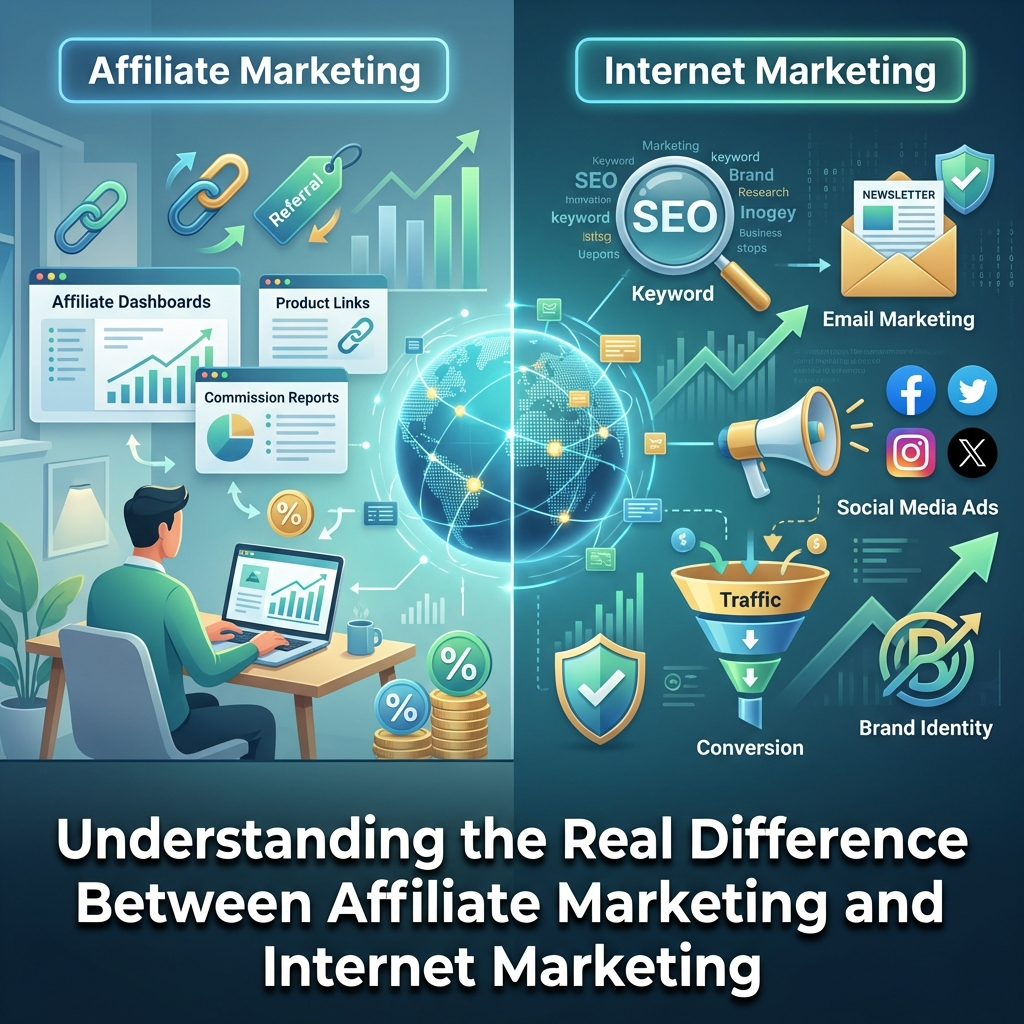
Understanding the Real Difference Between Affiliate Marketing and Internet Marketing

In the evolving landscape of online business, two phrases are often used interchangeably — affiliate marketing and internet marketing. Yet, they represent fundamentally distinct strategies with their own goals, tools, and mindsets. Grasping the nuances between them can define whether your digital strategy merely treads water or moves with precision toward long-term profitability.

Let’s cut through the jargon, dissect their differences, and explore how both disciplines can complement each other when strategized the right way.


The Foundation: What They Really Mean

What Is Affiliate Marketing?

Affiliate marketing is a performance-driven model in which an individual (the affiliate) promotes products or services of another company (the merchant) and earns a commission for each sale or lead generated. The affiliate acts as a bridge — connecting a potential customer to a product through blogs, social media, email campaigns, or videos — and gets compensated only when results are delivered.

Think of it as digital word-of-mouth, reinforced by tracking links and performance analytics. Affiliates don’t have to build or own the product; their strength lies in persuasion, positioning, and audience trust.

What Is Internet Marketing?

Internet marketing is the broader discipline that encompasses every marketing activity conducted online. It includes search engine optimization, paid ads, social media campaigns, email automation, and yes — affiliate marketing itself can be a component. The ultimate goal is to attract, convert, and retain customers in the digital space using multiple integrated strategies.

If affiliate marketing is a single gear, internet marketing is the entire machine. While one focuses narrowly on promoting specific products for commission, the other oversees brand building, audience growth, and multi-channel engagement.


The Core Differences

AspectAffiliate MarketingInternet Marketing
ObjectiveDriving sales or leads for another companyPromoting and growing your own brand, product, or service
OwnershipYou market someone else’s productYou control the product, message, and long-term strategy
Revenue ModelCommission-basedProfit-based from your own offerings
InvestmentLow — typically cost-effective startupHigher — involves ad spend, content creation, and branding
Control Over Customer DataMerchant owns the dataYou own the customer relationship and analytics
Risk LevelRelatively lowHigher — but with greater reward and equity

While both operate online, their financial and strategic DNA diverges. Affiliate marketing rewards influence and smart positioning. Internet marketing rewards vision and consistency.


The Skill Sets Required

For Affiliate Marketers

  • Ability to identify resonant products and niches.
  • Understanding of SEO-focused and conversion-driven content creation.
  • Insights into audience behavior to ensure genuine recommendations.
  • Data tracking and campaign analysis using tools like Google Analytics or affiliate dashboards.

For Internet Marketers

  • Broader command of digital disciplines such as PPC, funnel engineering, CRM tools, and automation.
  • Skill in cultivating a brand voice across multiple platforms.
  • Long-term strategic thinking focusing on customer acquisition and retention.

Affiliate marketing demands finesse in storytelling and persuasion; internet marketing demands strategy orchestration.


The Interplay Between the Two

It’s a mistake to think that choosing one excludes the other. In reality, these two often feed each other in a symbiotic loop. Many businesses use affiliate marketing as a component of their larger internet marketing plan to harness influencers and niche publishers.

On the flip side, savvy affiliates often evolve into full-spectrum digital marketers. They start by promoting other brands, learn traffic generation, master funnel creation, and eventually launch their own products. Those who navigate both worlds fluently gain an advantage: flexibility, creativity, and scalability.


Misconceptions That Often Blur the Line

  1. “Affiliate marketing is passive income.”
    While it can generate sustained revenue, it’s far from hands-off. Producing credible content and optimizing campaigns demand ongoing attention.

  2. “Internet marketing is only for big brands.”
    Small businesses and solopreneurs increasingly rely on internet marketing tools — from SEO to social storytelling — to build influence and compete with larger players.

  3. “Affiliate marketing requires no skill.”
    In 2025, competition and algorithm changes have raised the stakes. Success relies on precision targeting, authentic content, and a data-backed strategy.


Choosing the Right Path

Your choice between affiliate marketing and internet marketing depends on your goals and resources.

  • If you’re beginning and want to learn digital marketing fundamentals without the overhead of product management, affiliate marketing is ideal.
  • If you have a brand or product of your own — or aspire to build one — focusing on broader internet marketing will yield more control and long-term equity.

Both paths intersect at one key lesson: an understanding of human behavior. Whether you promote your own product or someone else’s, the core strategy is empathy combined with analytics.


The Future of Both Fields

Technology now redefines how these strategies interact. AI-driven ad placements, personalized product links, and automation tools make affiliate marketing more precise. Simultaneously, new data privacy regulations push internet marketing toward greater transparency and value-driven engagement.

These trends converge on one truth: trust has become the most critical currency online. The marketer who communicates authentically — regardless of the channel — wins.


Final Thoughts

Understanding the distinction between affiliate marketing and internet marketing isn’t about choosing sides; it’s about strategy alignment. The first is a tactic for generating revenue through partnership; the second is a holistic discipline shaping how that revenue ecosystem thrives.

Take a moment to see which one fits your mission. Start with one, master the fundamentals, and expand into the other. Both demand creativity, discipline, and respect for your audience’s intelligence — the hallmarks of marketing excellence, whether in 1960 or 2025.

Leave a Reply

The Ultimate Guide to Launching Your Affiliate Marketing Journey

If you’re reading this, chances are you’re intrigued by the idea of creating a revenue stream through affiliate marketing. Maybe you’ve read success stories or stumbled upon online debates about its profitability. Either way, you’re here to uncover how to start affiliate marketing successfully. Let’s break down the essentials and navigate the journey with clarity and creativity.

Understanding Affiliate Marketing

Before you start affiliate marketing, it’s crucial to understand its mechanics. Essentially, affiliate marketing is a performance-based model where you earn a commission by promoting other people’s or company’s products. Your goal is to leverage your platform—be it a blog, social media account, or YouTube channel—to drive traffic and conversions for the brand you’re representing.

Why Choose Affiliate Marketing?

Wondering if you should start affiliate marketing? Here are some compelling reasons:

  • Low Startup Costs: Entering the affiliate marketing realm doesn’t require a hefty investment. A basic website or platform is often enough to begin.
  • Flexibility: You choose when and how you work. Whether you’re a night owl or an early bird, the flexibility is unmatched.
  • Diverse Income Streams: It provides opportunities to diversify income, reducing reliance on a single source.

Steps to Start Affiliate Marketing

1. Identify Your Niche

This is the first step when you start affiliate marketing. A niche not only defines your target audience but also shapes your content and marketing strategy. Consider what you’re passionate about and where there is demand.

2. Research Affiliate Programs

Choose programs that align with your niche. Popular platforms include Amazon Associates, ShareASale, and Commission Junction. Evaluate the commission rates, terms of agreement, and the kind of products/services offered.

3. Create Valuable Content

Content is the driving force behind all successful affiliate marketers. Whether you’re writing a blog post, creating a video, or posting on social media, ensure your content is valuable and engaging. This builds trust and attracts a loyal audience.

4. Build Your Platform

To start affiliate marketing effectively, pick a platform that suits your strengths, be it blogging, YouTube, Instagram, or podcasts. Focus on where your target audience is most active.

5. Utilize SEO Techniques

Utilize search engine optimization (SEO) to drive organic traffic to your platform. Use keywords naturally within your content to avoid penalties while maximizing visibility.

6. Track Your Performance

Monitoring your progress is crucial to optimization. Tools like Google Analytics can provide insights into what’s working and what needs adjustment.

Challenges You Might Face

  • Overcoming Saturation: Affiliate marketing can be competitive. Stay ahead by being authentic and bringing a unique perspective.
  • Building Trust: It might take time to build an audience that trusts your recommendations. Consistency and transparency are key.
  • Managing Multiple Tasks: As an affiliate marketer, you’re often a one-person team. Organize your work and prioritize tasks efficiently.

Tips for Sustained Success

  • Leverage Social Proof: Share customer reviews and testimonials to build credibility.
  • Stay Informed: The digital landscape evolves rapidly. Keep learning and adapting.
  • Create Email Lists: Build and maintain an email list to communicate directly with your audience.
  • Engage with Your Community: Answer questions, participate in discussions, and foster a sense of community among your followers.

Notable Success Stories

Many have dared to start affiliate marketing and carved out stunning success. Pat Flynn of Smart Passive Income and Michelle Schroeder-Gardner of Making Sense of Cents are examples of individuals who turned their affiliate pursuits into lucrative endeavors. Learning from established marketers can provide valuable insights into best practices and innovative strategies.

Conclusion

Venturing into affiliate marketing can be both exciting and rewarding. It requires patience, creativity, and a willingness to learn. With a well-defined niche, an effective platform, and a commitment to providing genuine value, you’re ready to start affiliate marketing and potentially transform your financial landscape.

Leave a Reply

15 Proven Ways to Make Money Online A Beginner’s Guide to Digital Income

Are you tired of the 9-to-5 grind and dreaming of financial freedom? You’re not alone. Millions of people are searching for legitimate ways to make money online, whether to replace their full-time income or generate some extra cash on the side.

Why Consider Making Money Online?

The digital economy has opened countless opportunities for anyone with internet access. From college students to stay-at-home parents, retirees to full-time professionals – making money online is more accessible than ever before.

The benefits are compelling:

  • Flexible working hours
  • Location independence
  • Multiple income streams
  • Low startup costs
  • Unlimited earning potential

Let’s dive into 15 proven ways you can start earning money online, even if you’re a complete beginner.

1. Affiliate Marketing: The Digital Middleman

Affiliate marketing remains one of the most popular methods to make money online. Simply put, you promote other companies’ products and earn a commission when someone purchases through your unique link.

Getting started is straightforward:

  • Choose a niche you’re passionate about
  • Select relevant affiliate products
  • Create valuable content around those products
  • Promote your content to drive traffic
  • Optimize and scale what works

Platforms like Amazon Associates, ShareASale, and Commission Junction offer thousands of products across virtually every industry.

2. Freelancing Your Skills

Do you have marketable skills? Platforms like Upwork, Fiverr, and Freelancer connect you with clients worldwide seeking services like:

  • Writing and editing
  • Graphic design
  • Web development
  • Virtual assistance
  • Social media management
  • Translation

Start by creating a compelling profile highlighting your expertise and gradually build your reputation through quality work and positive reviews.

3. Create and Sell Digital Products

Digital products offer amazing profit margins since you create them once and sell infinitely. Popular options include:

  • eBooks
  • Online courses
  • Templates and printables
  • Stock photography
  • Music and sound effects
  • Software and apps

Platforms like Gumroad, Teachable, and Etsy make selling digital products straightforward, even for beginners.

4. Start a Blog

Blogging remains a viable way to make money online when approached strategically. Successful blogs monetize through:

  • Display advertising (Google AdSense)
  • Affiliate marketing
  • Sponsored content
  • Selling digital products
  • Offering coaching or consulting services

The key is choosing a profitable niche and consistently creating valuable content that attracts a loyal audience.

5. YouTube Channel Creation

With over 2 billion logged-in monthly users, YouTube offers immense potential for creators. You can earn through:

  • YouTube Partner Program ads
  • Channel memberships
  • Super Chats during live streams
  • Merchandise shelf
  • Affiliate marketing

Focus on providing value in a specific niche rather than trying to please everyone.

6. Sell Products on Amazon FBA

Amazon’s Fulfillment by Amazon (FBA) program handles storage, packaging, and shipping for your products. You find profitable items to sell, ship them to Amazon’s warehouses, and they handle the rest.

Popular approaches include:

  • Retail arbitrage (buying discounted products locally and reselling)
  • Online arbitrage (sourcing from online retailers)
  • Wholesale (buying in bulk from manufacturers)
  • Private labeling (creating your own branded products)

7. Create a Profitable Newsletter

Email newsletters have made a massive comeback, with platforms like Substack enabling creators to charge subscription fees for premium content.

Keys to success include:

  • Serving a specific audience
  • Providing unique insights
  • Maintaining consistency
  • Growing your subscriber list strategically

8. Virtual Coaching or Consulting

If you have specialized knowledge or skills, consider offering one-on-one coaching or consulting services. Areas in high demand include:

  • Business strategy
  • Career development
  • Health and fitness
  • Relationship coaching
  • Financial advice
  • Technical training

Platforms like Clarity.fm help connect experts with people seeking advice.

9. Online Tutoring and Teaching

Education is moving online rapidly. Platforms like VIPKid, Chegg, and Outschool connect teachers with students worldwide. You can teach:

  • Academic subjects
  • Languages
  • Music
  • Art
  • Technical skills
  • Test preparation

Many platforms require qualifications, but others focus more on your knowledge and teaching ability.

10. Social Media Management

Businesses need help managing their social media presence. If you understand platforms like Instagram, TikTok, Facebook, and LinkedIn, you can offer management services including:

  • Content creation
  • Scheduling posts
  • Community engagement
  • Analytics reporting
  • Strategy development

This service is particularly in demand among small businesses lacking internal resources.

11. Dropshipping

Dropshipping allows you to sell products without holding inventory. When customers place orders, your supplier ships directly to them.

Platforms like Shopify make it easy to start, but success requires:

  • Finding reliable suppliers
  • Selecting profitable products
  • Creating a branded experience
  • Mastering marketing and customer service

12. Print-on-Demand

Print-on-demand combines creativity with entrepreneurship. You design graphics for t-shirts, mugs, posters, and other items, and the provider handles printing and shipping when orders come in.

Platforms like Printful, Printify, and Redbubble make this accessible to anyone with design skills or creative ideas.

13. Become a Virtual Assistant

Many entrepreneurs and executives need help with administrative tasks. Virtual assistants provide services like:

  • Email management
  • Calendar scheduling
  • Travel arrangements
  • Data entry
  • Research
  • Customer support

This role offers flexibility and often allows you to work with multiple clients.

14. Create a Mobile App

The app economy continues to grow rapidly. While development requires technical skills, tools like BuildFire and Appy Pie have made app creation more accessible to non-developers.

Monetization options include:

  • In-app purchases
  • Subscription fees
  • Advertising
  • Freemium models

15. Online Surveys and Microtasks

While not a path to riches, platforms like Swagbucks, Amazon MTurk, and UserTesting pay for small tasks including:

  • Taking surveys
  • Testing websites
  • Watching videos
  • Completing short assignments

These can be good options for generating small amounts of extra income in your spare time.

Getting Started: Your Action Plan

Ready to make money online? Here’s how to begin:

  1. Assess your skills and interests

Then click the button below

Leave a Reply